How to Evaluate Developer Collaboration Skills During Technical Interviews
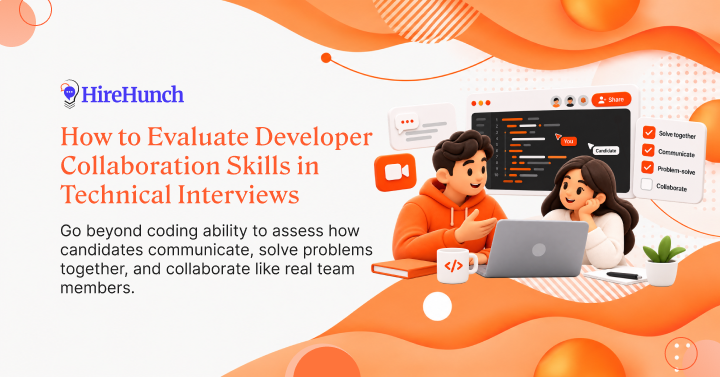
To effectively evaluate developer collaboration skills during technical interviews, simulate realistic team-based scenarios where candidates must code, communicate, and problem-solve collaboratively. Use collaborative coding platforms or pair programming environments, observe communication style and technical contributions, and assess the ability to work with feedback, clarify requirements, and integrate others’ ideas within a real-world engineering workflow.
Recruiting software engineers who can collaborate seamlessly is now as crucial as securing coding experts. Software projects rarely succeed on technical skill alone: collaborative dynamics, shared problem solving, and clear communication differentiate high-performing engineering teams. However, evaluating how candidates work with others under real-world conditions is often overlooked or reduced to superficial questions, making it difficult to confidently assess collaboration potential when hiring for engineering teams.
Why Developer Collaboration Skills Matter in Interviews
Engineering success depends on more than solo talent and technical accuracy. Modern development workflows rely on teams navigating ambiguous requirements, integrating code across multiple contributors, and coordinating on shared tasks. When technical interviews ignore collaborative contexts, they risk hiring candidates with strong individual skills but poor team fit.
The Impact of Collaboration on Engineering Performance
Strong collaboration enables faster code reviews, fewer integration issues, more effective incident response, and overall improved delivery velocity. Developers who communicate well, share feedback constructively, and adapt to others’ working styles are often the unsung drivers of initiative success.
Key Attributes of Collaborative Engineers
- Proactive and clear communication
- Efficient pair programming and shared debugging
- Ability to respectfully challenge and debate design decisions
- Adaptability to changing requirements and peer input
- Constructive feedback handling
Technical interviews must measure these attributes to reliably predict real-world performance and team cohesion.
Common Shortcomings of Traditional Interview Approaches
Many engineering interviews still use single-candidate coding problems or whiteboarding, missing an opportunity to assess collaborative capability in action. While such exercises can uncover algorithmic skill, they are ineffective for understanding interpersonal dynamics, communication under pressure, or joint problem solving.
- Whiteboard algorithms offer no context for team workflows
- Solo work ignores multi-developer codebase integration
- Communication is usually tested via static behavioral questions
This approach leaves significant blind spots that can undermine hiring decisions and increase the risk of onboarding individuals who struggle to work with others.
Defining and Measuring Developer Collaboration in Technical Interviews
To assess collaboration objectively, define what strong collaboration looks like in your engineering context. This involves concrete, observable behaviors rather than subjective impressions. Typical indicators include clarity of code explanations, responsiveness to peer questions, willingness to coach or be coached, collaborative problem decomposition, and negotiation of shared approaches.
Observable Collaboration Signals
- Actively involving peers in ideation or debugging
- Explaining thought process in understandable terms
- Asking clarifying questions before coding
- Offering code suggestions and accepting feedback
- Documenting or summarizing shared decisions
Define scoring rubrics or interview prompts around these signals to create a repeatable evaluation process.
Pair Programming as a Tool for Evaluating Collaboration
Pair programming interviews place two people – candidate and interviewer or candidate and another engineer – in a shared code environment, simulating real team workflows. This makes it possible to observe collaborative skills in a direct, authentic context.
How Pair Programming Reveals Collaboration Skills
During a pair programming exercise, interviewers can examine:
- How candidates articulate their ideas and coding decisions
- Ability to split tasks, synchronize efforts, and merge solutions
- Response to confusion or disagreement: openness or defensiveness
- Initiative in seeking and offering help
Best Practices for Pair Programming Interviews
- Set clear goals and expectations before starting
- Switch driver and navigator roles halfway through
- Encourage shared debugging and troubleshooting
- Debrief both technical result and communication process
Successful pair programming interviews reveal a candidate’s practical teamwork style under realistic conditions, surpassing what hypothetical questions provide.
Simulating Real Engineering Workflows in Interviews
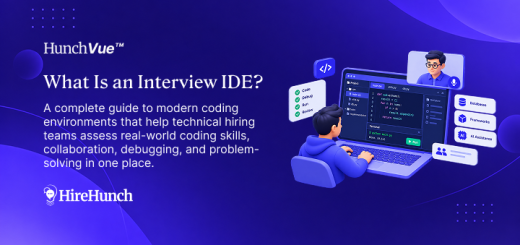
Collaboration in hiring should mirror collaboration on the job. Real-world engineering is rarely linear or isolated; it involves live coding on projects, managing file structures, peer reviewing, and debugging together. Interview platforms that support multi-file projects, version control, API integrations, and real-time code collaboration are vital for comprehensive evaluation.
Key Features That Enable Realistic Collaboration Assessment
- Multi-user, simultaneous editing capabilities
- Code annotation and inline commenting
- Live problem-solving in complex projects, not sandbox snippets
- Support for frameworks, APIs, and database integration
Environments simulating actual engineering collaboration reduce false positives and negatives by naturally surfacing communication style and technical cooperation challenges. For organizations interested in these capabilities, review what to look for in a technical interview platform.
Evaluating Communication, Feedback, and Code Review Abilities
Collaboration is not simply about doing the work together – it’s about how information, critique, and decisions flow between engineers. Structured interview tasks assessing code review, documentation, and requirements negotiation can distinguish high performers from candidates who default to solitary work modes.
Implementing a Collaborative Code Review Segment
- Present the candidate with a peer’s code sample that includes intentional flaws or design decisions.
- Ask the candidate to review it and provide feedback in a structured, constructive way.
- Discuss their rationale for suggested changes and responsiveness to interviewer follow-up questions.
Assessing Response to Feedback and Change Requests
Ask candidates to revise a portion of code based on input from the interviewer or a simulated team member and observe whether they:
- Embrace suggestions with open communication or react defensively
- Ask clarifying questions about requested changes
- Document rationale for implementing or rejecting edits
These behaviors directly predict future effectiveness in code review cycles, pull requests, and collaborative production environments.
Assessing Collaborative Problem Solving With Group Scenarios
Beyond pair programming, some organizations assess collaboration by placing candidates in group interviews or multi-person scenarios. This approach is especially valuable for evaluating senior engineers who often mentor or coordinate teams.
Small Group Problem Solving
- Two or more candidates (or candidate and existing team members) solve a design or debugging challenge together
- Facilitators observe contribution balance, conflict resolution, and consensus-building
- Opportunities to assess leadership and ability to enable others
Simulated Standups or Incident Response Drills
Role-playing team rituals such as standups or incident war rooms can reveal how candidates share updates, coordinate actions, escalate concerns, and synthesize team input under time constraints.
Group scenarios reveal subtle elements of team awareness and distributed ownership that solo interviews cannot access.
Structured Evaluation Criteria for Collaboration Skills
Objectivity is essential in evaluating team skills. Using standardized scorecards and detailed rubrics reduces bias and aligns interviewers on what positive collaboration looks like. Effective criteria include:
- Active listening and information-sharing
- Clarity in technical communication
- Ability to integrate peer suggestions into solutions
- Growth mindset and teachability
- Respectful challenge and debate of ideas
Standardization allows for direct comparison between candidates and ensures decisions are driven by observable behavior, not gut instincts.
Focusing on collaboration skills in technical interviews bridges the divide between individual coding brilliance and true engineering impact; team success depends on how developers work together, not just on what they accomplish alone.
The Role of AI-Assisted Tools in Collaborative Interviewing
AI is now part of modern development and is changing how interviews assess engineering skill and collaboration. Candidates may use AI-powered code suggestions, search integration, or automated debugging assistants during collaborative coding. Rather than blocking these tools, interviews should observe how candidates responsibly use AI as part of team problem solving.
Evaluating AI Collaboration Skills
- How does the candidate communicate intent and context to the AI assistant?
- Do they validate AI-generated output?
- Are they able to discuss AI suggestions with a peer, critique improvements, and merge ideas?
Assessing AI-augmented workflows gives insight into a candidate’s readiness for hybrid teams utilizing both human and machine expertise.
For organizations interested in hiring for AI-integrated collaboration, explore AI-assisted technical interviews.
Frequently Asked Questions
How do you structure a technical interview to evaluate collaboration?
Structure interviews with exercises that require real-time teamwork, such as pair programming, group design discussions, or collaborative code reviews. Use platforms that support multi-user editing, and employ structured scorecards to assess both communication and technical integration skills.
What interview questions reveal developer collaboration abilities?
Behavioral questions about past experience can help, but practical exercises are stronger. Use scenarios asking candidates to resolve technical disagreements, integrate peer suggestions, or explain code decisions to a teammate.
How can we avoid bias in assessing collaboration?
Develop clear rubrics with defined behaviors expected at each performance level. Focus on observable actions (such as how feedback is given and received) rather than personality traits. Employ panel interviewers or review interview recordings for calibration.
Should collaboration be tested for all engineering roles or just senior positions?
Collaboration is critical across most technical roles, though complexity may scale with seniority. Junior engineers should be able to work effectively in teams, while senior roles may require leadership of collaborative sessions, mentoring, and resolving interpersonal challenges.
How does remote interviewing change collaboration evaluation?
Remote interviews require careful facilitation and technology that supports real-time multi-user code editing and communication. Pay special attention to async communication ability, screen-sharing etiquette, and inclusive participation for distributed teams.
Integrating Collaboration Evaluation Into Modern Technical Hiring
Engineering organizations that hire for lasting impact go beyond technical puzzles and assess a candidate’s ability to collaborate in the same environments and workflows that underpin real software delivery. By incorporating pair programming, group exercises, structured criteria, and tools that enable multi-user project interaction, hiring teams can uncover the skills that predict successful team integration and performance.
Solutions like HunchVue provide realistic coding environments, integrated video, and collaboration features designed for these advanced interview workflows. For teams scaling their interview bandwidth or seeking expert interviewers to fully assess technical and collaborative strengths, HunchServe combines experienced interviewers and structured, production-like interviews. Modern technical hiring depends on evaluating the complete engineer – including their ability to contribute to and elevate the team as a whole.