What Is a Collaborative Coding Interview? Benefits and Best Practices
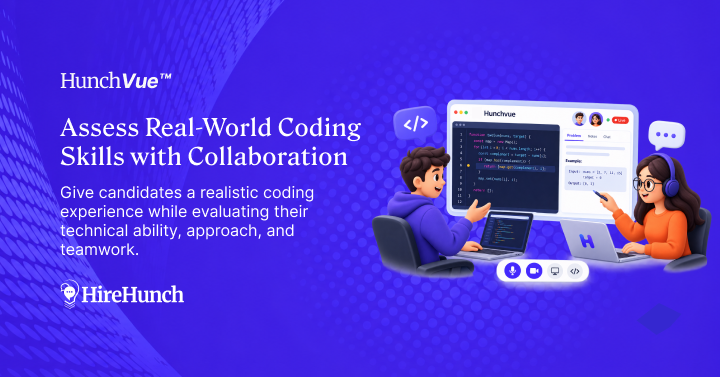
A collaborative coding interview is a technical interview format where a candidate and interviewer work together in a shared, interactive coding environment, often simulating real-world engineering collaboration. This approach assesses not only technical skills but also how candidates communicate, solve problems collaboratively, use debugging tools, and navigate multi-file projects, providing a deeper evaluation of practical engineering ability.
Technical hiring is shifting rapidly, with organizations demanding higher confidence in engineering hires. As engineering work grows more complex and collaborative, evaluating a candidate’s ability to contribute in realistic development settings becomes essential. Traditional, isolated coding challenges often fail to reflect these production realities, pushing hiring teams to adopt collaborative coding interviews. This article explores why these interviews matter, how they differ from conventional formats, the key benefits for teams, and the best practices for conducting them effectively.
Understanding the Collaborative Coding Interview Model
A collaborative coding interview is distinct from traditional technical interviews. Instead of solitary problem-solving, the candidate and interviewer engage in pair programming or co-development inside an interactive coding environment. The focus moves from isolated algorithmic puzzles toward solving problems in a way that mirrors real-life software development, including code navigation, debugging, and technical discussion.
How the Process Typically Works
- The interviewer and candidate join a shared, live coding environment – often a browser-based IDE supporting real project structures and multiple files.
- A realistic development problem is introduced, such as debugging an existing application, adding a feature, or fixing a bug across multiple code files.
- The interviewer may ask questions, guide the direction, or act as a “teammate,” inviting the candidate to think aloud and suggest solutions.
- Both parties can edit code, run applications, and use integrated tools like debuggers or AI coding assistants.
Core Objectives of the Format
- Evaluate technical depth and code comprehension
- Assess collaboration and communication skills
- Observe debugging, decision-making, and real-world problem-solving
- See how the candidate works with frameworks, APIs, or databases
Collaborative Coding Interviews vs. Traditional Coding Interviews
Understanding the contrast between collaborative and traditional formats is crucial for hiring leaders. Both aim to evaluate technical talent, yet their focus and underlying assumptions differ significantly.
Traditional Interviews: A Quick Recap
- Typically involve single-file algorithmic questions or coding on a whiteboard
- Candidates write code alone, with little dynamic interaction
- Minimal exposure to real project structures, frameworks, or existing codebases
- Communication is generally limited to explaining logic after-the-fact
Key Differences
- Collaboration: Traditional formats evaluate individual contribution, while collaborative coding assesses interaction, feedback, and mutual problem solving.
- Technical Realism: Multi-file projects, debugging tools, and frameworks are central in collaborative interviews, enabling assessment in authentic engineering settings.
- Skill Breadth: Collaborative formats probe code navigation, context switching, and comprehension in addition to algorithmic reasoning.
- Process Over Outcome: Interviewers observe problem-solving processes – not just final answers – gaining insight into candidate approaches and adaptability.
Key Benefits of Collaborative Coding Interviews
Organizations that implement collaborative formats report several practical advantages, particularly concerning the accuracy and fairness of technical evaluation.
- Deeper Skill Assessment: Candidates are evaluated on the full range of skills – coding, debugging, collaboration, and technical communication – providing a more complete picture of engineering ability.
- Real-World Simulation: By mirroring production scenarios, teams better predict how a candidate will perform after hiring.
- Improved Candidate Experience: Candidates can demonstrate their strengths in a familiar, interactive environment, reducing anxiety and attracting diverse engineering talent.
- Fairer Evaluation: Structured, interactive sessions help reduce bias based on rote memorization or artificial coding constraints.
- Collaboration-Centric Hiring: Prioritizes the skills that truly matter in modern software teams, such as communication, pair programming, and working with others under time constraints.
- Granular Feedback and Evidence: Interactive interview sessions (especially when supported by recording, activity tracking, and scorecards) allow for detailed post-interview review and shared hiring decisions.
Collaborative coding interviews reveal not only what candidates know, but how they reason, communicate, and build software in team-based, production-like contexts – delivering a more authentic basis for technical hiring decisions.
What Skills and Qualities Do Collaborative Coding Interviews Reveal?
Collaborative formats evaluate a mix of technical and interpersonal abilities that are difficult to gauge through traditional interviews alone.
Key Technical Skills
- Code comprehension in multi-file environments
- Adding features or fixing bugs in existing codebases
- Effective use of frameworks, APIs, and databases
- Running, testing, and debugging code in real time
- Responsible use of AI coding helpers and validation of their outputs
Collaboration and Soft Skills
- Ability to discuss technical trade-offs and explain reasoning as problems unfold
- Receiving and building on feedback from the interviewer or teammates
- Working through ambiguity and context switching
- Communicating challenges, assumptions, and alternative approaches during joint problem solving
These competencies form the core of day-to-day engineering. Technical teams using collaborative interviews gain sharper insight into how candidates will fit, contribute, and grow.
How to Structure a Collaborative Coding Interview Effectively
Successful interviews depend on thoughtful planning and structured execution. Here is a workflow to maximize fairness and insight:
- Define the Interview Objective: Know exactly what engineering abilities you want to assess – framework skills, debugging, code comprehension, or team communication.
- Prepare a Production-Like Problem: Use an existing codebase, realistic user story, or multi-step bug fix. The scenario should reflect a problem your team actually solves.
- Set Up the Right Environment: Choose a collaborative IDE supporting multi-file navigation, debugging, code execution, and (where appropriate) AI-assisted coding.
- Assign Interviewer Roles: Decide whether the interviewer will act as a teammate, ask guiding questions, or periodically assess skills independently.
- Provide Clear Instructions: Explain the problem, clarify expectations for interaction, and define what tools (including AI) may be used by the candidate.
- Monitor and Guide the Session: Actively collaborate, ask “why” and “how” questions, and encourage the candidate to narrate their reasoning.
- Score with Structured Criteria: Use defined evaluation rubrics or scorecards for consistency and fairness.
- Capture Interview Evidence: Record sessions, aggregate code, comments, activity logs, and interviewer notes to enable deeper review by the hiring panel.
Structured, production-aligned sessions drive better outcomes for both candidates and hiring teams.
What Infrastructure Supports High-Quality Collaborative Coding Interviews?
Technical interviewing platforms are at the heart of effective collaborative interviews. Key infrastructure requirements include:
- Browser-based, real-time collaborative coding IDE supporting multi-file projects
- Integrated debugging tools, terminal access, and live application previews
- Support for modern frameworks, databases, APIs, and multiple programming languages
- Recording and playback functionality for post-interview review and audit
- Structured evaluation workflows, scorecards, and interviewer feedback forms
- Optional AI assistance – empowering both candidates and interviewers to assess AI literacy and responsible tool usage
- Security features and proctoring as appropriate
Solutions like HunchVue enable these scenarios by combining multi-file project support, collaborative real-time editing, live debugging, integrated AI, structured feedback forms, and interview evidence capture inside a browser-based platform. Teams achieve greater reliability, consistency, and confidence in hiring decisions.
For organizations scaling technical hiring with limited engineer capacity, Interview as a Service with expert interviewers can further extend capability, allowing teams to prioritize engineering time without compromising assessment quality.
Best Practices for Running and Evaluating Collaborative Coding Interviews
To maximize the value of collaborative interviews, engineering leaders and recruiters should implement several best practices:
1. Standardize Evaluation Criteria
Create consistent rubrics focusing on code navigation, debugging skill, clarity of thought, collaborative behaviors, and ability to work with modern engineering tools.
2. Train Interviewers on Collaborative Techniques
Effective collaborative interviews require more than technical ability. Interviewers must foster open dialogue, manage time, and provide actionable feedback, not simply “lead” the interview unilaterally.
3. Encourage Real-Time Communication
Invite candidates to think aloud and share trade-offs as they work, turning the session into a two-way exchange. This yields insight into technical depth and team compatibility.
4. Capture and Share Interview Evidence
Use platform features to record code changes, run results, questions, and feedback. Consolidate these artifacts to enable objective, cross-team review and reduce unconscious bias.
5. Align Problems with Actual Job Demands
Problems should reflect the day-to-day challenges on your engineering team: not just leetcode or academic puzzles. Assess real skills like framework usage, API integration, and debugging with production-like issues.
- Update problem libraries regularly to match evolving technology stacks
- Include scenarios that require candidates to read, understand, and improve existing code
- Integrate collaborative code review or pair debugging where role-relevant
6. Respect the Candidate Experience
Clearly communicate the purpose and format of the collaborative session in advance, and ensure the technology is intuitive and reliable. A positive, transparent experience improves your employer brand and helps attract senior technical talent.
For more guidance on structuring technical interviews that mirror authentic engineering work, consider educational resources or expert-led Interview as a Service partners.
How Does AI Fit into Collaborative Coding Interviews?
AI-assisted development is changing how engineers work, and its responsible inclusion in interviews reflects real-world expectations. In a collaborative technical interview, allowing candidates to use AI coding assistants is not about lowering standards. Instead, it supports evaluation of:
- Effective prompt crafting and result validation
- Judgment when to follow, adapt, or reject AI-generated code
- Debugging and refinement of AI outputs
- Responsible disclosure and communication while using AI tools collaboratively
Structured evaluation can help interviewers differentiate between candidates who can responsibly harness AI to solve complex problems, and those who treat AI as a shortcut without proper analysis or reasoning. Interview platforms with integrated, controlled AI features – such as HunchVue – can facilitate this nuanced measurement.
Teams can also use interview activity logs to trace when, how, and why AI suggestions were accepted or modified, providing further depth to the evaluation.
Frequently Asked Questions
What types of roles benefit most from collaborative coding interviews?
This format is ideal for roles where engineers regularly work in teams, contribute to established codebases, debug complex issues, or use modern frameworks. Full-stack, backend, frontend, DevOps, and technical lead positions especially benefit.
Can collaborative coding interviews be conducted remotely?
Yes, most collaborative interview platforms are browser-based and fully remote-friendly. Candidates and interviewers join a shared online environment with real-time code editing, voice, and video communication, enabling global technical hiring.
How should interviewers assess AI usage during a collaborative interview?
Focus on the candidate’s ability to use AI judiciously: Are they validating outputs, adapting suggestions, and demonstrating independent problem-solving? Integrate AI assistance only where it realistically reflects your team’s workflows and evaluate how candidates interact with it as part of the workflow.
What are the risks of using collaborative interviews?
Main risks include technical platform outages, unclear interview structure, or interviewer inconsistency. These can be mitigated through interviewer training, structured evaluation criteria, reliable platforms, and clear candidate communication.
How do collaborative coding interviews impact diversity and inclusion?
This format can improve fairness and inclusion by reducing reliance on rote memorization or whiteboard performance, allowing candidates to demonstrate strengths in realistic engineering settings. Consistent rubrics and structured interview evidence also help minimize potential bias.
How do collaborative interviews help reduce bias in technical hiring?
By focusing on observable, job-relevant behaviors and structured criteria, collaborative coding interviews generate objective data for review. Recording sessions and standardized scorecards provide transparency and support consistent, fair decisions.
Building Confidence in Technical Hiring with Collaborative Coding Interviews
Collaborative coding interviews are more than a hiring trend – they are a response to how software engineering actually operates. By evaluating candidates in realistic, production-aligned settings, teams gain deeper insight into technical capability, collaboration, communication, and AI tool usage. Carefully structured interviews, combined with advanced platforms like HunchVue, pave the way for more confident and equitable hiring decisions aligned with modern engineering workflows.
To explore how collaborative coding interviews can improve your engineering hiring process, consider reviewing how purpose-built technical interviewing platforms support production-like coding tasks, multi-file environments, integrated AI, and structured evaluation at scale.