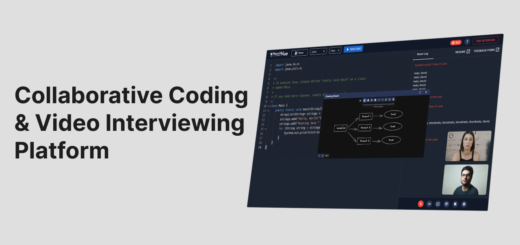
How to Conduct an Effective Live Coding Interview

To conduct an effective live coding interview, structure the session to assess candidates using realistic, multi-file coding environments similar to actual engineering workflows. Define clear evaluation criteria, select relevant technical problems, observe problem-solving and collaboration, and utilize purpose-built interview platforms to capture coding activity, decisions, and communication for consistent, unbiased hiring outcomes.
Technical teams cannot rely on traditional whiteboard questions or single-file code editors if the goal is to identify engineers who thrive in real project environments. The industry shift toward more collaborative, codebase-oriented development means that live coding interviews must reflect these realities. Interviewers face a critical challenge: designing and delivering sessions that predict on-the-job success, minimize bias, and support thorough decision-making. Efficiently running such interviews at scale requires modern workflows and robust infrastructure.
What Makes Live Coding Interviews Effective for Technical Hiring?
Live coding interviews move beyond theoretical questions, allowing interviewers to observe candidates as they solve problems representative of daily engineering work. This approach provides deep visibility into how a candidate approaches a task, iterates on their code, uses debugging techniques, and communicates their reasoning in real time.
Real-World Skills Assessed
- Problem-solving process: How systematically does the candidate identify problems and plan solutions?
- Code comprehension: Can the candidate navigate and extend unfamiliar code?
- Technical decision-making: Does the candidate choose practical solutions aligned with industry standards?
- Debugging ability: How effective is the candidate at diagnosing and fixing issues?
- Communication and collaboration: How clearly do they explain decisions, ask questions, or pair with an interviewer?
Shortcomings of Traditional Approaches
Interviews that focus solely on abstract algorithmic puzzles or basic single-file editors often fail to reflect how engineers build, test, and debug modern software. These methods overlook important capabilities such as managing multi-file project structures, integrating APIs, handling databases, using frameworks, and collaborative workflows.
How to Structure a Live Coding Session for Maximum Insight
Creating an effective live coding environment requires careful preparation and intentional design. A well-structured interview distinguishes genuine engineering capability from rote coding practice.
- Define Evaluation Criteria: Start by identifying the specific skills, problem types, and behaviors you want to assess. Use scoring rubrics aligned with on-the-job requirements.
- Select Realistic Tasks: Choose coding problems that map to your stack, frameworks, and project patterns. Prioritize tasks that require comprehension, design tradeoffs, and debugging, rather than just algorithmic tricks.
- Set Up a Real-World Coding Environment: Use an interview platform that supports multi-file projects, code execution, debugging, and relevant integrations. Avoid tools that limit candidates to artificial or overly simplified scenarios.
- Communicate Expectations: Explain the task, constraints, available tools, and allowed resources. Clarify if AI coding assistants may be used and how their use will be evaluated.
- Observe and Interact: Watch the candidate’s workflow, code structure, and testing approach. Ask for clarifications and encourage candidates to talk through their reasoning.
- Document and Evaluate Consistently: Use structured feedback forms and scoring guidelines. Record the interview or capture activity logs to enable unbiased, collaborative review by the hiring team.
Effective live coding interviews create a bridge between theoretical knowledge and practical engineering, allowing hiring teams to make confident decisions based on how candidates actually navigate real-world challenges.
Choosing the Right Coding Environment and Tools
A critical component of live coding interviews is the environment in which candidates perform. Modern engineering challenges are rarely solved in isolation or within single files. Interview environments must simulate the workflows, technologies, and tooling engineers use every day.
Key Features to Look For
- Support for multiple files, folders, and project structures
- Ability to use relevant programming languages, frameworks, APIs, and databases
- Integrated code execution, debugging, and application preview features
- Activity tracking, version history, and the option for session recording
- Secure, browser-based access with collaborative coding capabilities
Comparing Available Platforms
Many traditional code interview tools provide only a limited in-browser editor that cannot replicate real engineering environments. Improved platforms offer browser-based IDEs, project upload, live SQL execution, API testing, and paired coding. For advanced teams, using an interview platform for real-world coding supports a more complete skills evaluation.
Evaluating Candidates: What Should Interviewers Focus On?
Even with the right environment, interview effectiveness depends on what the interviewer observes and prioritizes. Evaluation should move far beyond code correctness to encompass the holistic engineering process.
Core Areas of Evaluation
- Problem Analysis: How does the candidate approach ambiguous, incomplete, or evolving requirements?
- Technical Solution Design: Are design decisions thoughtful, scalable, and consistent with the scenario?
- Code Quality: Is the solution readable, modular, and maintainable? Are best practices followed?
- Testing: Does the candidate validate functionality with tests or manual verification?
- Debugging: How are issues identified and resolved in real time?
- Communication: Are ideas and tradeoffs articulated clearly?
- Effective Use of Tools: Does the candidate navigate the environment with proficiency and show strong development habits?
Evaluating Use of AI Assistance
AI coding assistants are increasingly part of daily engineering work. Allowing their use during interviews can provide unique signals. The focus should be on how the candidate prompts, reviews, and validates AI-suggested code, rather than simply accepting outputs at face value. Strong candidates question, test, and adapt AI-generated results, demonstrating responsible usage.
For further detail, see should you allow AI coding assistants in developer interviews.
Addressing Bias and Improving Consistency in Live Interviews
Bias is a persistent risk in any subjective evaluation process. Live coding interviews, if not structured properly, can amplify inconsistent judgments or overlook key signals.
Best Practices for Reducing Bias
- Use standardized scorecards with explicit rubrics for each major skill area
- Record interviews and preserve coding activity logs to support collaborative review and calibration
- Train interviewers in objective, behavioral interviewing techniques
- Ensure consistent interview structure and technical challenges across all candidates for a given role
Structured Feedback and Interview Intelligence
Structured feedback enables data-driven decisions. Systems that allow tagging, bookmarking, and annotating specific moments during interviews facilitate richer review across the hiring panel. This can be especially valuable as organizations grow and require multi-interviewer participation or audit trails to resolve conflicting impressions.
Scaling Engineering Hiring With Purpose-Built Interview Platforms
As hiring volumes increase, so do the challenges of bandwidth, consistency, and operational overhead in running live coding interviews. Manual processes break down with scale, and valuable engineering time is often spent interviewing instead of building products. Modern interview platforms streamline the process by providing:
- Automated scheduling, invitations, and calendar integration
- Library of technical challenges mapped to real-world stacks and frameworks
- Integrated video, code playback, and activity analytics
- Centralized scorecards, feedback, and interview archiving
- Permission controls and proctoring tools to ensure fairness
Some teams further reduce internal load by using Interview as a Service solutions, where trained experts conduct interviews on the organization’s behalf, employing structured workflows and advanced technical infrastructure.
Collaborative Coding and Pair Programming in Live Interviews
Evaluating engineering skills in isolation ignores one of the most critical professional requirements: effective collaboration.
Collaborative Problem Solving
Platforms that enable true pair programming allow the interviewer and candidate to work together on a problem, simulating real-world sprints or debugging sessions. This exposes not only raw coding skills but also adaptability, communication style, and willingness to accept or offer feedback.
Benefits for Interviewers and Candidates
- Deeper insight: See how a candidate collaborates, explains tradeoffs, and adapts to project changes
- Better experience: Candidates report higher engagement and less stress when collaboration is emphasized
- Improved diversity: Reduces bias associated with solo algorithmic performance and supports broader skill assessment
Review how to use collaborative coding interviews for engineering hiring for more guidance on this approach.
Frequently Asked Questions
What types of technical problems work best in live coding sessions?
Select tasks that mimic real engineering work, such as debugging an existing codebase, extending a feature, integrating with APIs, or performing operations on databases, rather than only whiteboard-style algorithmic puzzles.
Should candidates be allowed to use the internet or AI tools during live coding interviews?
Allowing internet and AI use can reflect realistic working conditions if guidelines are clearly defined. Assess not only what tools are used but also how responsibly the candidate selects, adapts, and justifies tool outputs.
How long should a typical live coding interview last?
Most sessions range from 45 to 90 minutes, which provides enough time for problem-solving, discussion, and some real-time collaboration. Adjust timing based on the depth and scope of the task.
How can interviewers reliably compare candidates across different sessions?
Use standardized questions, structured scorecards, and interview evidence such as recordings or coding transcripts to calibrate interviewer ratings and reduce subjective disparities. Collaborative hiring panel reviews also help.
What are signs of a successful live coding interview?
Evidence of structured reasoning, clear problem decomposition, maintainable and tested code, effective communication, and reflective use of tools indicate a strong interview. The session should also result in actionable, documented feedback for the hiring team.
Advancing Technical Hiring With Better Live Coding Interviews
Teams seeking to identify and hire top-tier engineers cannot afford to rely on legacy interview formats divorced from actual software development practices. Effective live coding interviews demand realistic, production-like environments, structured evaluation criteria, collaborative workflows, and robust platform support. By aligning interview design and execution with the way engineers truly work, organizations improve quality of hire, reduce bias, and create a fairer process for candidates.
Adopting purpose-built solutions like HunchVue empowers teams to create interviews that mirror project teams, frameworks, and workflows. The ability to capture interview evidence, enable structured collaboration, and support advanced evaluation approaches streamlines hiring operations and delivers a more complete view of engineering talent. For organizations with fast-growing or distributed teams, exploring Interview as a Service can further extend interviewer coverage and operational consistency without sacrificing process quality.
As the complexity of software development continues to evolve, technical hiring must keep pace. Realistic live coding interviews are a critical step toward building engineering teams positioned for long-term success.