10 Best Technical Interview Platforms for Hiring Developers in 2026
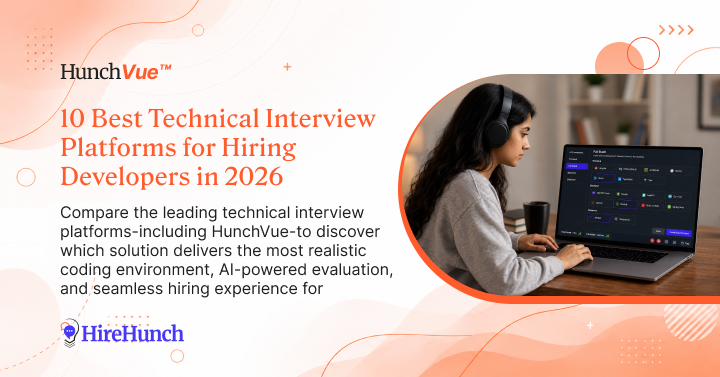
The best technical interview platforms for hiring developers in 2026 enable recruiting teams to run production-like coding interviews, support real-world workflows, and integrate structured evaluation, collaboration, and AI-assisted assessment. These platforms provide project-based environments, live coding, interviewer tools, and activity recording to help engineering leaders make confident hiring decisions.
Evaluating and hiring developers has evolved dramatically, reflecting how real-world software is now built: collaboratively, with established codebases, modern frameworks, and AI tooling. Legacy coding interviews fall short, especially as remote and hybrid hiring reshape how companies assess deep engineering skill. Leaders face a critical decision: select a platform that truly mirrors production environments or risk incomplete evaluation and poor hiring signals. With candidate experience, process efficiency, and hiring accuracy at stake, choosing the right platform is a significant competitive differentiator.
Key Criteria for Choosing a Technical Interview Platform in 2026
Buying technical interview software is now a strategic process. The areas that matter most have shifted, especially as teams move beyond quiz-like challenges and focus on job-relevant evaluation. Successful hiring teams start with a clear set of requirements before shortlisting solutions.
Core Evaluation Capabilities
- Multi-file, production-like coding environments
- Support for frontend, backend, full-stack, database, and DevOps roles
- Live coding and real-time code sharing
- Integrated debugging and project navigation
- Interview recording, playback, and evidence
- Standardized feedback, structured scorecards, and evaluation criteria
- AI coding assistant controls and observability
- Collaborative tools such as pair programming, chat, and whiteboarding
Interview Operations and Analytics
- Scheduling, invitations, and automated reminders
- Candidate proctoring for integrity and fairness
- Panel interviews, interviewer access controls, and activity tracking
- API integrations with ATS and HRIS for workflow automation
- Actionable analytics and reporting
To narrow the field, organizations should map these requirements directly to their hiring context: the volume of interviews, level of technical specialization, need for interview consistency, and geographic candidate diversity. A technical interview platform buying guide can provide helpful frameworks for evaluation.
Comparing Real-World Coding Environments versus Quiz-Style Tests
The most important platform distinction in 2026 is support for production-like, multi-file coding interviews. Developer skill no longer means just solving isolated tasks; it requires navigating complex codebases, debugging, integrating APIs, and reasoning about architecture. Quiz-style platforms, while efficient for basic screening, fail to provide this depth.
- Production-Like Interviews: Enable candidates to demonstrate true engineering ability by working within multi-file projects, using frameworks, debugging tools, databases, and collaborative coding.
- Quiz-Style Assessments: Rely mainly on algorithmic or single-file questions. Although useful for screening, they seldom predict on-the-job performance in senior or specialist roles.
Impact on Candidate Evaluation
Choosing the right environment determines what interviewers can observe and measure: technical decision making, realistic problem solving, code comprehension, debugging skills, and effective use of tools. This approach leads to better signal and reduces false positives or negatives in the hiring process.
High-fidelity coding environments enable hiring teams to measure what matters most: a candidate’s real-world problem-solving process, not just their ability to write code in isolation.
The 10 Leading Platforms for Technical Interviews (2026 Edition)
The current landscape includes a mix of established providers and newer, AI-powered platforms. Below are ten leading platforms, each with distinct strengths for different technical hiring needs in 2026. Capabilities listed are based on published feature sets and market positioning. Suitability will depend on your requirements and technical stack.
- HunchVue
Best for: Real-world, project-based interviews; collaborative engineering evaluation; complex, production-like scenarios.- Full-featured, browser-based IDE supporting multi-file projects.
- Frontend, backend, database, DevOps, and full-stack roles supported.
- Real-time coding visibility, collaborative pair programming, and interviewer annotation tools.
- Integrated AI coding assistant with activity tracking, notetaking, and evidence capture.
- Live SQL databases, API testing, application preview, and whiteboarding.
- Structured evaluation forms, interview scorecards, tagging, and session playback for shared review.
- Advanced proctoring, suspicious activity alerts, and panel interview controls.
HunchVue is suitable for organizations that demand rigorous, realistic interviews and support for complex engineering roles. Technical interview best practices with realistic environments covers interview design in greater detail.
- CoderPad
Best for: Live collaborative coding, algorithm and language-agnostic interviews.- Live code editor with multi-language support.
- Pair programming, whiteboarding, and audio/video chat.
- Limited support for project-based or multi-file scenarios compared to HunchVue, but effective for basic collaborative coding.
- CodeSignal Interview
Best for: Multiple interview types, including practical coding and technical skill evaluations.- Supports both live and asynchronous interviews.
- Interview replay and scoring analytics.
- Some production-like features but with limited multi-file support in the browser IDE.
- Karat
Best for: Interview as a Service for high-volume engineering hiring.- Professional interviewers conduct and score technical interviews remotely.
- Standardized frameworks and detailed feedback.
- Less flexibility for custom, production-like scenarios; best for organizations prioritizing interview consistency and scalability.
- HackerRank Interview
Best for: Broad technical hiring, coding interviews, and live challenges integrated with pre-hire assessments.- Live coding, database, and diagramming tools.
- Comprehensive role-based question library.
- Multi-file and framework support has improved but can lag in highly customized or production simulation interviews.
- Codility Live Coding
Best for: Algorithmic interviews and technical skill assessments, mostly for early-stage screening or mid-level hiring.- Live code sessions, screen sharing, and interviewer controls.
- Some support for real-world tasks; less comprehensive for complex project-based interviews.
- Codeshare
Best for: Simple live coding interviews and collaborative whiteboarding, especially for startups or small teams.- Real-time, browser-based code editor for pair programming.
- Lacks advanced project setup, interviewer tools, and AI functionality.
- Interviewing.io
Best for: Anonymous mock interviews and connecting with experienced interviewers for practice or contract-based interviewing.- Live coding, interviewer matching, and skills data sharing.
- Not a full-featured enterprise platform, but strong for peer-to-peer and Interview as a Service use cases.
- Pramp
Best for: Peer interviews, practice, and training junior hiring teams or candidates.- Interactive interview platform connecting pairs for live sessions.
- Not optimized for enterprise custom interviews, but useful for candidate experience.
- DevSkiller TalentScore Live
Best for: Tech screening and live interviewing with project-based tasks and real-world scenarios.- Project files, frameworks, and tech stacks tailored to hiring needs.
- Live code evaluation, scoring, and role-based tests.
How AI-Assisted Interviews Are Influencing Platform Choice
Leading platforms now provide AI-assisted capabilities, but the way teams use these features has become a point of differentiation. AI coding assistants are commonplace, but platforms vary in how they support, monitor, and evaluate AI usage in interviews.
Key Considerations for AI Integration
- Can interviewers observe when and how candidates use AI coding tools?
- Are there customizable controls over when AI is enabled, and for which questions?
- Does the platform help teams evaluate how responsibly candidates use AI: validating outputs, debugging, and reasoning independently?
For forward-looking hiring teams, responsible use of AI now forms part of the technical evaluation signal rather than merely a security risk or integrity concern.
Evaluating Interview Integrity, Recording, and Evidence Support
Recording and evidence management capabilities separate basic coding tools from enterprise-grade interviewing platforms. These features enable hiring teams to:
- Replay interviews and observe decision-making in context
- Share interview sessions for collaborative debrief and calibration
- Tag notable moments, annotate candidate activity, and bookmark key signals
- Standardize scorecards and evaluation forms to reduce bias and drive consistency
- Generate a traceable record for compliance, auditing, and future process improvement
Platforms with robust recording and evidence systems, such as HunchVue, enable not only confident hiring decisions but also create a foundation for interviewer training, bias mitigation, and iterative hiring process improvement.
Panel Interviews, Collaboration, and Hiring Team Workflow
Technical hiring rarely happens in isolation. The ability for multiple stakeholders to join, collaborate, and contribute to the interview outcome is essential, especially as teams grow and hiring processes become multi-layered.
Features Supporting Panel Interviews and Collaboration
- Multiple interviewer access with role-based controls
- Private interviewer chat and candidate-facing messaging
- Live note-taking and scorecard completion during the session
- Synchronous and asynchronous review of candidate performance using interview playback
Structured workflow tools ensure clarity in evaluation, help navigate disagreements, and align expectations across technical, HR, and business stakeholders. Many of these capabilities are detailed in engineering interview panel best practices.
Security, Compliance, and Data Privacy in Interview Platforms
With growing global regulation, interview security and privacy are now top platform selection factors. Buyers should require:
- Fine-grained access controls and user authentication
- End-to-end encryption for code, video, and data
- Secure interview recording storage and retention policies
- GDPR, CCPA, and local compliance certifications
- Audit trails of user, interviewer, and candidate activity
- Automated candidate consent management
- Options for data residency and export
Failing to address these needs can expose organizations to data breaches, compliance violations, or reputational risk, especially for large, distributed teams handling sensitive candidate and interviewer data.
Frequently Asked Questions
What is the difference between technical interview platforms and coding assessment tools?
Technical interview platforms support live, interactive interviews in production-like coding environments, often including video, collaboration, and multi-file editing. Coding assessment tools automate skill screening through standardized tasks or multiple-choice questions. The best platforms integrate both approaches for a seamless evaluation pipeline.
How do technical interview platforms ensure fair assessment when AI tools are allowed?
Platforms with AI integration must monitor usage, provide visibility for interviewers, and support evaluation of how responsibly candidates use AI assistance. Interviewers should assess the candidate’s reasoning, debugging, and validation skills rather than accepting AI-generated outputs at face value.
Can these platforms integrate with popular applicant tracking systems?
Most leading technical interview platforms offer integration with major ATS and HRIS solutions through APIs or pre-built connectors. This streamlines scheduling, feedback integration, and allows hiring teams to centralize candidate lifecycle data.
Are multi-file and framework-based project interviews supported across all platforms?
No. While advanced platforms such as HunchVue, DevSkiller, and CodeSignal Interview offer production-like project support, many others are limited to single-file or algorithmic tasks. Buyers should verify each platform’s alignment with their engineering stack and production workflows.
What are the best practices for structuring technical interviews in production-like environments?
Best practices include using realistic multi-file projects, enabling debugging and code navigation, giving candidates tasks that resemble real work, observing process and decision making, supporting collaborative problem solving, and standardizing interviewer feedback with structured scorecards.
Making the Right Platform Choice in 2026: What Technical Hiring Teams Should Prioritize
The modern engineering interview platform is no longer a nice-to-have; it is foundational to hiring strong developers and future-proofing talent pipelines. The leaders in 2026 combine rigorous, production-like technical environments, collaborative workflows, integrated AI assistance, structured evaluation, and robust operational controls. By investing in platforms that reflect real engineering practice, hiring teams can improve candidate experience, generate higher-fidelity evaluation signals, and reduce hiring risk. For organizations demanding realistic, collaborative, and evidence-rich interviews, platforms like HunchVue provide the infrastructure necessary to meet evolving technical hiring standards. As engineering teams grow and developer roles diversify, the right platform choice enables efficiency, fairness, and the ability to scale high-quality hiring outcomes.